PET 2026 · Economy
Budget deficits: separate three balancesबजट घाटे: राजकोषीय, राजस्व और प्राथमिक घाटा
Formulas, economic meaning, numerical check and the FRBM Act, 2003घाटों के सूत्र, आर्थिक अर्थ, संख्यात्मक उदाहरण और FRBM अधिनियम, 2003
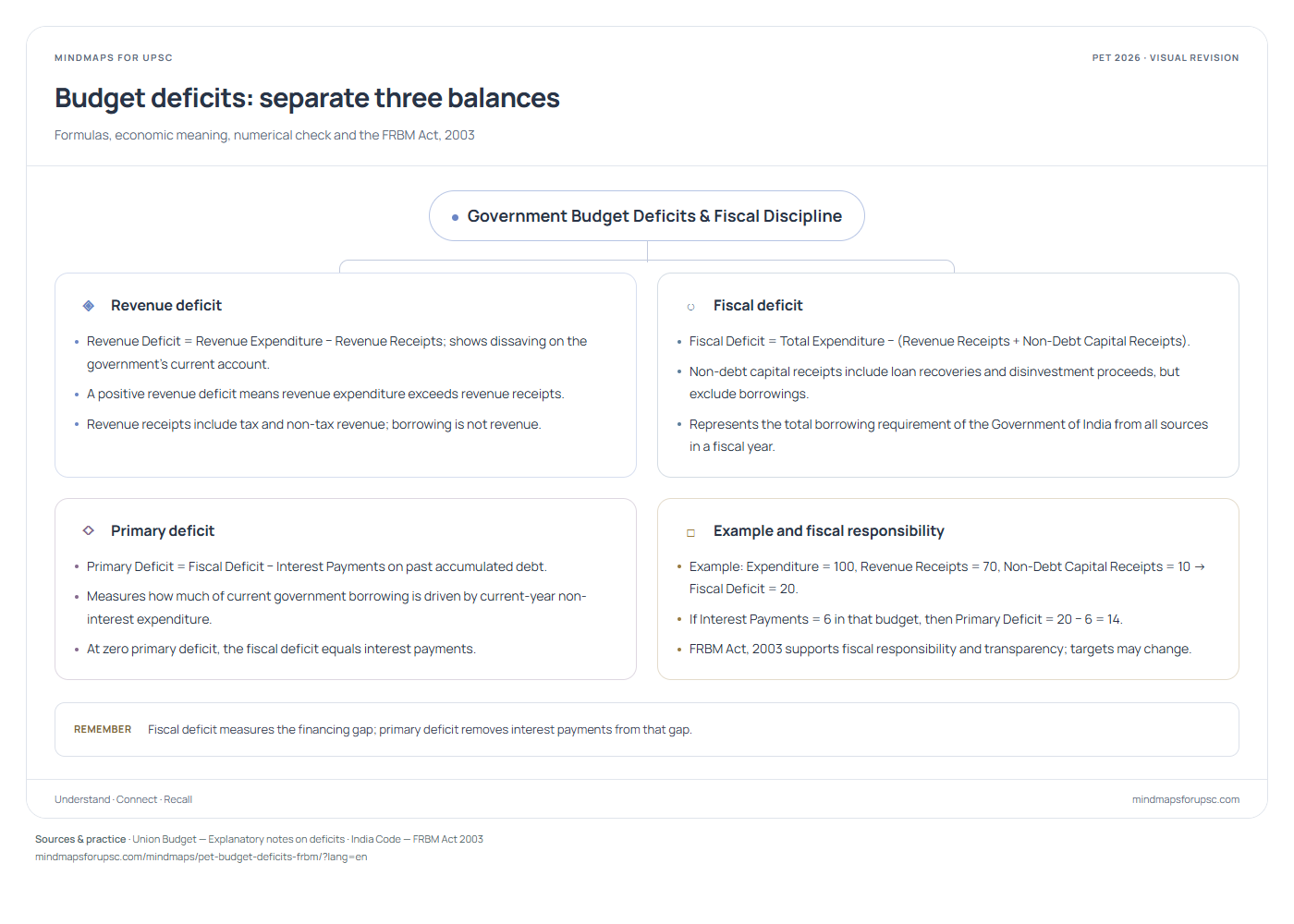
Government Budget Deficits & Fiscal Discipline
◈
Revenue deficit
- Revenue Deficit = Revenue Expenditure − Revenue Receipts; shows dissaving on the government's current account.
- A positive revenue deficit means revenue expenditure exceeds revenue receipts.
- Revenue receipts include tax and non-tax revenue; borrowing is not revenue.
○
Fiscal deficit
- Fiscal Deficit = Total Expenditure − (Revenue Receipts + Non-Debt Capital Receipts).
- Non-debt capital receipts include loan recoveries and disinvestment proceeds, but exclude borrowings.
- Represents the total borrowing requirement of the Government of India from all sources in a fiscal year.
◇
Primary deficit
- Primary Deficit = Fiscal Deficit − Interest Payments on past accumulated debt.
- Measures how much of current government borrowing is driven by current-year non-interest expenditure.
- At zero primary deficit, the fiscal deficit equals interest payments.
□
Example and fiscal responsibility
- Example: Expenditure = 100, Revenue Receipts = 70, Non-Debt Capital Receipts = 10 → Fiscal Deficit = 20.
- If Interest Payments = 6 in that budget, then Primary Deficit = 20 − 6 = 14.
- FRBM Act, 2003 supports fiscal responsibility and transparency; targets may change.
सरकारी बजट घाटे एवं राजकोषीय अनुशासन
◈
राजस्व घाटा
- राजस्व घाटा = राजस्व व्यय − राजस्व प्राप्तियाँ; यह सरकार के चालू खाते पर व्यय की अधिकता दर्शाता है।
- धनात्मक राजस्व घाटे का अर्थ है कि राजस्व व्यय, राजस्व प्राप्तियों से अधिक है।
- राजस्व प्राप्तियों में कर और गैर-कर राजस्व आते हैं; उधार राजस्व नहीं है।
○
राजकोषीय घाटा
- राजकोषीय घाटा = कुल व्यय − (राजस्व प्राप्तियाँ + गैर-ऋण पूँजीगत प्राप्तियाँ)।
- गैर-ऋण पूँजीगत प्राप्तियों में ऋण वसूली और विनिवेश आय शामिल होती है, किंतु उधार शामिल नहीं होता।
- यह एक वित्तीय वर्ष में सभी स्रोतों से भारत सरकार की कुल उधार (ऋण) आवश्यकता को दर्शाता है।
◇
प्राथमिक घाटा
- प्राथमिक घाटा = राजकोषीय घाटा − पूर्व संचित ऋणों पर किए गए ब्याज भुगतान।
- यह दर्शाता है कि सरकार की वर्तमान उधारी का कितना हिस्सा चालू वर्ष के गैर-ब्याज खर्चों के कारण है।
- प्राथमिक घाटा शून्य होने पर राजकोषीय घाटा, ब्याज भुगतान के बराबर होता है।
□
उदाहरण और राजकोषीय उत्तरदायित्व
- उदाहरण: कुल व्यय = 100, राजस्व प्राप्ति = 70, गैर-ऋण पूँजीगत प्राप्ति = 10 → राजकोषीय घाटा = 20।
- यदि उसी बजट में ब्याज भुगतान = 6 हो, तो प्राथमिक घाटा = 20 − 6 = 14 होगा।
- FRBM अधिनियम, 2003 राजकोषीय उत्तरदायित्व और पारदर्शिता को बढ़ावा देता है; लक्ष्य बदल सकते हैं।
Practise this concept · संबंधित प्रश्न
One visual, several questions. These links open the original paper at the matching question.
Sources & study notes · स्रोत
Independent revision material, linked to the paper’s concepts. The question papers and answer-key status are available on OpenPYQ.