PET 2026 · Economy
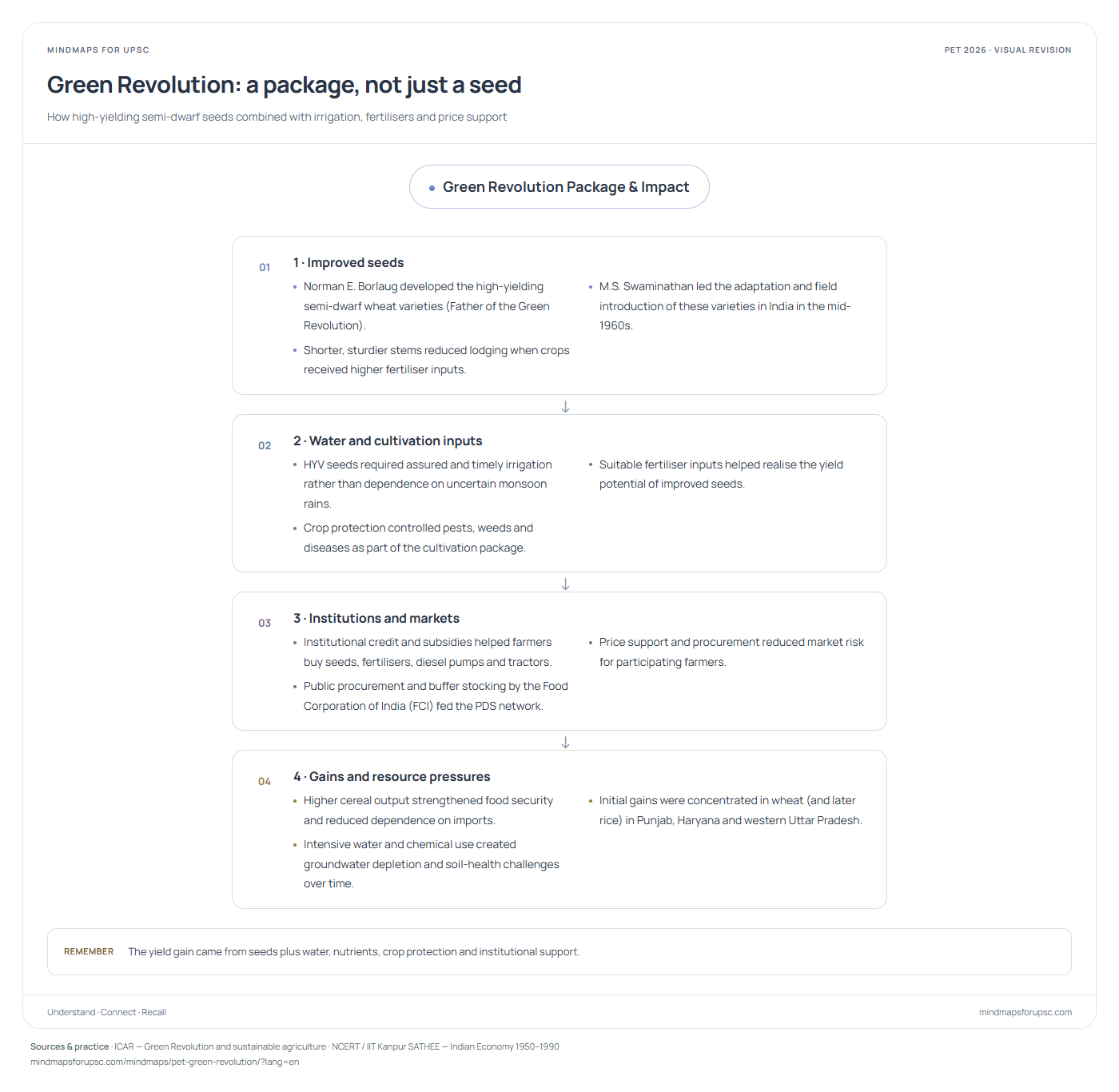
Green Revolution: a package, not just a seed हरित क्रांति: उन्नत बीज से खाद्य सुरक्षा तक How high-yielding semi-dwarf seeds combined with irrigation, fertilisers and price support अधिक उपज वाली अर्ध-बौनी किस्मों, सिंचाई, उर्वरक और न्यूनतम समर्थन मूल्य का समन्वित पैकेज
01
1 · Improved seeds
Norman E. Borlaug developed the high-yielding semi-dwarf wheat varieties (Father of the Green Revolution). M.S. Swaminathan led the adaptation and field introduction of these varieties in India in the mid-1960s. Shorter, sturdier stems reduced lodging when crops received higher fertiliser inputs.
02
2 · Water and cultivation inputs
HYV seeds required assured and timely irrigation rather than dependence on uncertain monsoon rains. Suitable fertiliser inputs helped realise the yield potential of improved seeds. Crop protection controlled pests, weeds and diseases as part of the cultivation package.
03
3 · Institutions and markets
Institutional credit and subsidies helped farmers buy seeds, fertilisers, diesel pumps and tractors. Price support and procurement reduced market risk for participating farmers. Public procurement and buffer stocking by the Food Corporation of India (FCI) fed the PDS network.
04
4 · Gains and resource pressures
Higher cereal output strengthened food security and reduced dependence on imports. Initial gains were concentrated in wheat (and later rice) in Punjab, Haryana and western Uttar Pradesh. Intensive water and chemical use created groundwater depletion and soil-health challenges over time. Remember The yield gain came from seeds plus water, nutrients, crop protection and institutional support.
01
1 · उन्नत बीज
नॉर्मन ई. बोरलॉग ने अधिक उपज देने वाली अर्ध-बौनी गेहूँ की किस्में विकसित कीं (विश्व हरित क्रांति के जनक)। एम.एस. स्वामीनाथन ने 1960 के दशक के मध्य में भारत में इन किस्मों के अनुकूलन और प्रसार का नेतृत्व किया। छोटे, मज़बूत तनों से अधिक उर्वरक मिलने पर फसल के गिरने का जोखिम घटा।
02
2 · जल और कृषि आदान
HYV बीजों से पूरी उपज लेने के लिए अनिश्चित मानसून के बजाय सुनिश्चित और समयबद्ध सिंचाई आवश्यक थी। उपयुक्त उर्वरक-आदान ने उन्नत बीजों की उपज-क्षमता को साकार करने में मदद की। खेती के संयुक्त उपायों में कीट, खरपतवार और रोग नियंत्रण भी शामिल था।
03
3 · संस्थाएँ और बाज़ार
संस्थागत ऋण और सब्सिडी ने किसानों को उन्नत बीज, उर्वरक, पंप-सेट और ट्रैक्टर खरीदने में सक्षम बनाया। मूल्य समर्थन और सरकारी खरीद ने भाग लेने वाले किसानों का बाज़ार-जोखिम घटाया। भारतीय खाद्य निगम (FCI) द्वारा सरकारी खरीद और बफर स्टॉक ने सार्वजनिक वितरण प्रणाली (PDS) को मज़बूत किया।
04
4 · लाभ और संसाधनों पर दबाव
अनाज की बढ़ी उपज ने खाद्य सुरक्षा को मज़बूत किया और आयात पर निर्भरता घटाई। प्रारंभिक लाभ मुख्यतः गेहूँ (और बाद में चावल) तथा पंजाब, हरियाणा व पश्चिमी उत्तर प्रदेश तक केंद्रित रहे। जल और रसायनों के अत्यधिक उपयोग से कालांतर में भूजल दोहन और मृदा स्वास्थ्य से जुड़ी चुनौतियाँ उत्पन्न हुईं। याद रखें उपज की वृद्धि बीज, जल, पोषक तत्त्व, फसल-सुरक्षा और संस्थागत सहयोग के संयुक्त प्रभाव से हुई।
Practise this concept · संबंधित प्रश्न One visual, several questions. These links open the original paper at the matching question.
Sources & study notes · स्रोत Independent revision material, linked to the paper’s concepts. The question papers and answer-key status are available on OpenPYQ.