PET 2026 · Economy
Five-Year Plans: changing priorities पंचवर्षीय योजनाएँ: विकास मॉडल और प्राथमिकताएँ Track growth models, core priorities and economic thinkers from the First to the Ninth Plan प्रथम से नौवीं पंचवर्षीय योजना तक के विकास मॉडल, मुख्य प्राथमिकताएँ और प्रमुख अर्थशास्त्री
01
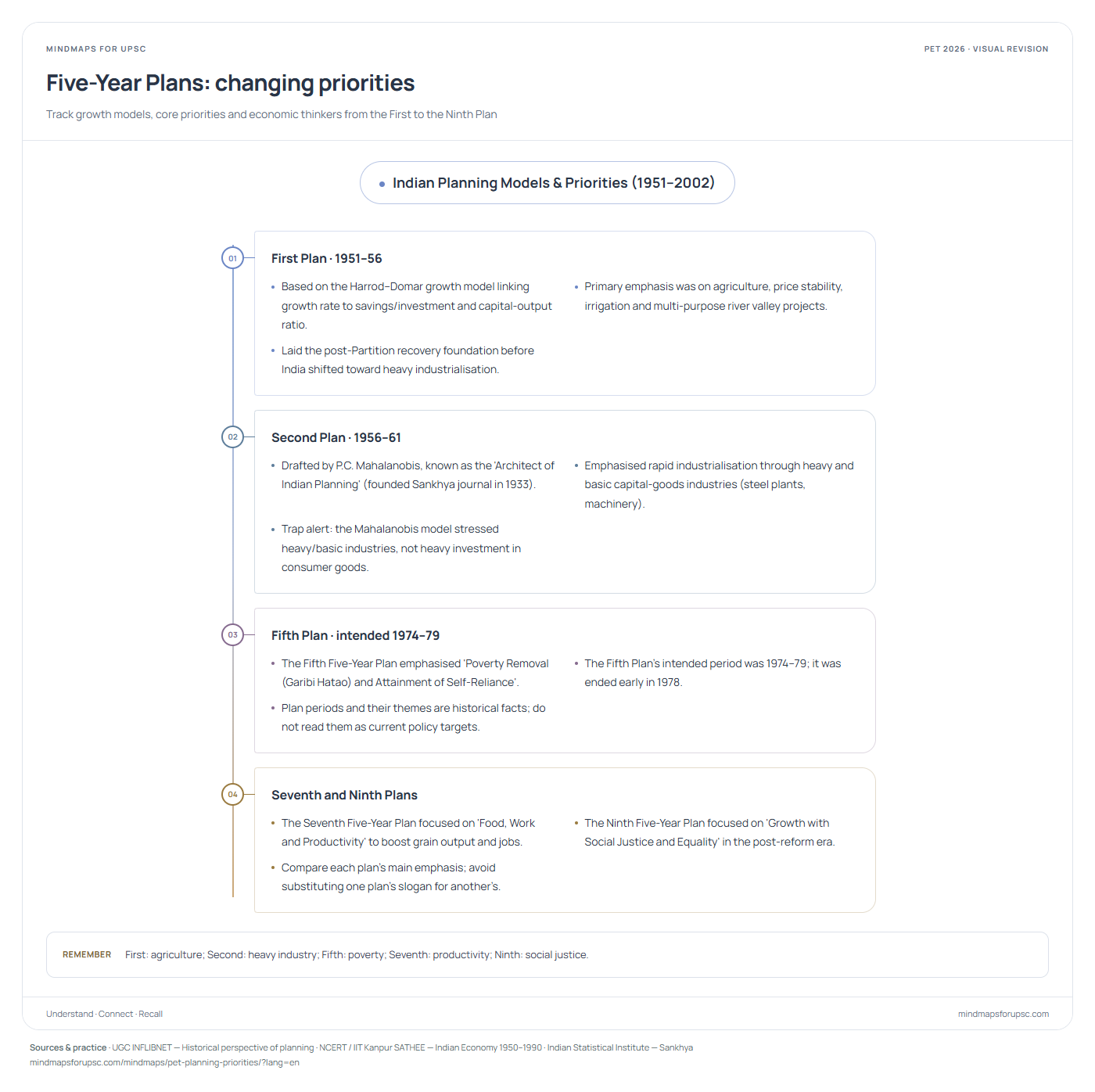
First Plan · 1951–56
Based on the Harrod–Domar growth model linking growth rate to savings/investment and capital-output ratio. Primary emphasis was on agriculture, price stability, irrigation and multi-purpose river valley projects. Laid the post-Partition recovery foundation before India shifted toward heavy industrialisation.
02
Second Plan · 1956–61
Drafted by P.C. Mahalanobis, known as the 'Architect of Indian Planning' (founded Sankhya journal in 1933). Emphasised rapid industrialisation through heavy and basic capital-goods industries (steel plants, machinery). Trap alert: the Mahalanobis model stressed heavy/basic industries, not heavy investment in consumer goods.
03
Fifth Plan · intended 1974–79
The Fifth Five-Year Plan emphasised 'Poverty Removal (Garibi Hatao) and Attainment of Self-Reliance'. The Fifth Plan’s intended period was 1974–79; it was ended early in 1978. Plan periods and their themes are historical facts; do not read them as current policy targets.
04
Seventh and Ninth Plans
The Seventh Five-Year Plan focused on 'Food, Work and Productivity' to boost grain output and jobs. The Ninth Five-Year Plan focused on 'Growth with Social Justice and Equality' in the post-reform era. Compare each plan’s main emphasis; avoid substituting one plan’s slogan for another’s. Remember First: agriculture; Second: heavy industry; Fifth: poverty; Seventh: productivity; Ninth: social justice.
01
प्रथम योजना · 1951–56
यह हैरोड-डोमर वृद्धि मॉडल पर आधारित थी, जो आर्थिक वृद्धि को बचत/निवेश और पूँजी-उत्पाद अनुपात से जोड़ता है। इसमें कृषि, मूल्य स्थिरता, सिंचाई और बहुउद्देशीय नदी घाटी परियोजनाओं को सर्वोच्च प्राथमिकता दी गई। भारी औद्योगीकरण की ओर बढ़ने से पहले इसने विभाजन-पश्चात आर्थिक पुनर्निर्माण की मज़बूत नींव रखी।
02
द्वितीय योजना · 1956–61
पी.सी. महालनोबिस ('भारतीय योजना के वास्तुकार', जिन्होंने 1933 में 'सांख्य' जर्नल स्थापित किया) की रणनीति पर आधारित। इसमें भारी और बुनियादी पूँजीगत उद्योगों (इस्पात संयंत्र, भारी मशीनरी) के माध्यम से तीव्र औद्योगीकरण पर बल दिया गया। सावधानी: महालनोबिस मॉडल ने भारी और बुनियादी उद्योगों पर बल दिया था, न कि उपभोक्ता वस्तुओं और कृषि में भारी विनियोग पर।
03
पाँचवीं योजना · निर्धारित 1974–79
पाँचवीं पंचवर्षीय योजना की मुख्य प्राथमिकता 'गरीबी उन्मूलन (गरीबी हटाओ) और आत्मनिर्भरता' की प्राप्ति थी। पाँचवीं योजना की निर्धारित अवधि 1974–79 थी; इसे 1978 में समय से पहले समाप्त कर दिया गया। योजना-अवधियाँ और उनके ध्येय ऐतिहासिक तथ्य हैं; इन्हें वर्तमान नीतिगत लक्ष्य न मानें।
04
सातवीं और नौवीं योजनाएँ
सातवीं पंचवर्षीय योजना ने खाद्यान्न उत्पादन और रोज़गार बढ़ाने के लिए 'खाद्य, रोजगार और उत्पादकता' पर बल दिया। नौवीं पंचवर्षीय योजना का मुख्य ध्येय 'सामाजिक न्याय और समानता के साथ विकास' (Growth with Social Justice and Equality) था। हर योजना की मुख्य प्राथमिकता की तुलना करें; एक योजना का ध्येय दूसरी पर लागू न करें।
Practise this concept · संबंधित प्रश्न One visual, several questions. These links open the original paper at the matching question.
Sources & study notes · स्रोत Independent revision material, linked to the paper’s concepts. The question papers and answer-key status are available on OpenPYQ.