01
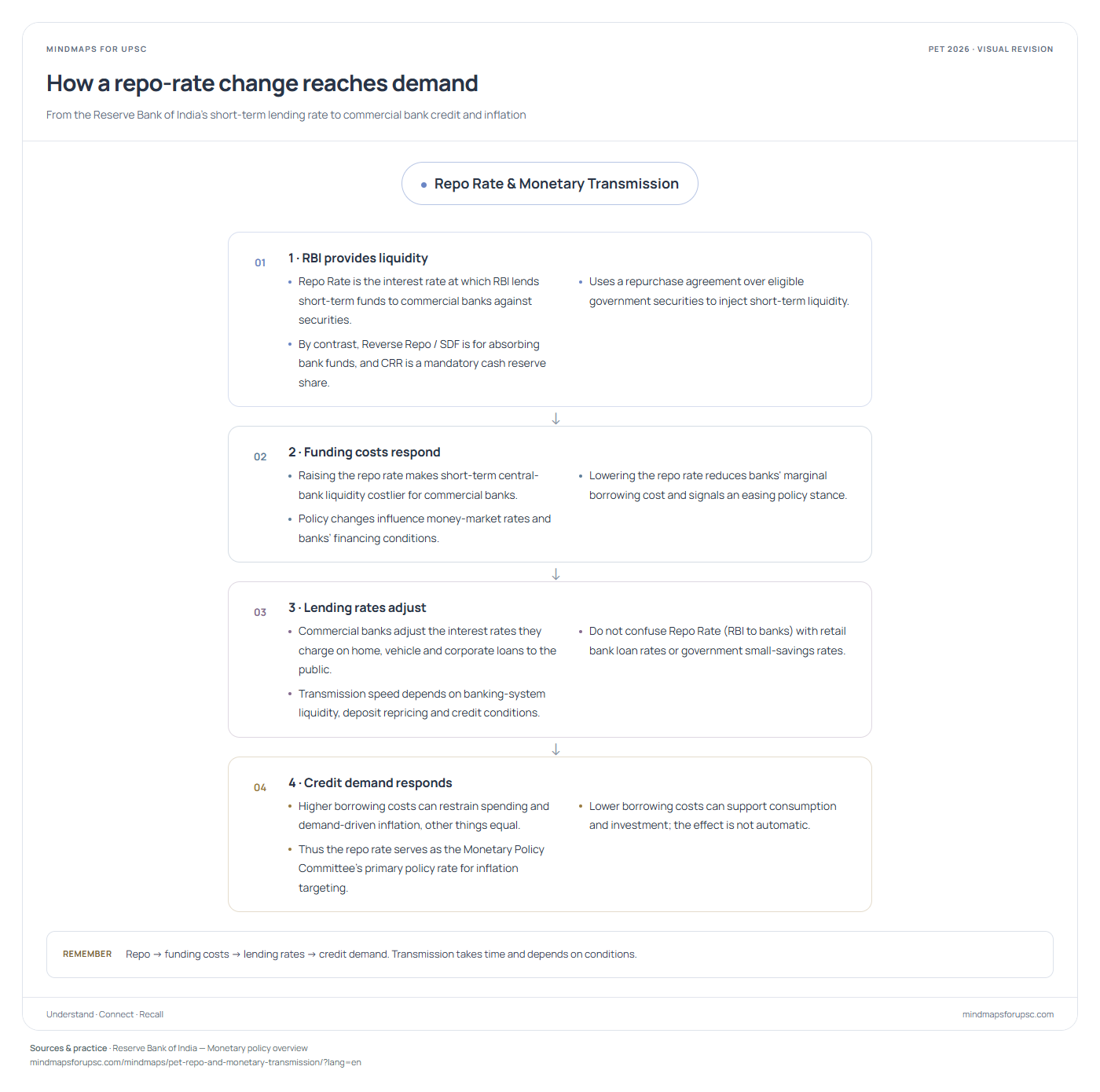
1 · RBI provides liquidity
Repo Rate is the interest rate at which RBI lends short-term funds to commercial banks against securities. Uses a repurchase agreement over eligible government securities to inject short-term liquidity. By contrast, Reverse Repo / SDF is for absorbing bank funds, and CRR is a mandatory cash reserve share.
02
2 · Funding costs respond
Raising the repo rate makes short-term central-bank liquidity costlier for commercial banks. Lowering the repo rate reduces banks' marginal borrowing cost and signals an easing policy stance. Policy changes influence money-market rates and banks’ financing conditions.
03
3 · Lending rates adjust
Commercial banks adjust the interest rates they charge on home, vehicle and corporate loans to the public. Do not confuse Repo Rate (RBI to banks) with retail bank loan rates or government small-savings rates. Transmission speed depends on banking-system liquidity, deposit repricing and credit conditions.
04
4 · Credit demand responds
Higher borrowing costs can restrain spending and demand-driven inflation, other things equal. Lower borrowing costs can support consumption and investment; the effect is not automatic. Thus the repo rate serves as the Monetary Policy Committee's primary policy rate for inflation targeting. Remember Repo → funding costs → lending rates → credit demand. Transmission takes time and depends on conditions.
01
1 · RBI तरलता देता है
रेपो दर वह ब्याज दर है जिस पर आरबीआई प्रतिभूतियों के बदले वाणिज्यिक बैंकों को अल्पकालिक धन उधार देता है। इसमें अल्पकालिक तरलता उपलब्ध कराने के लिए पात्र सरकारी प्रतिभूतियों के पुनर्खरीद समझौते का उपयोग होता है। इसके विपरीत, रिवर्स रेपो / SDF बैंकों से अतिरिक्त तरलता सोखने के लिए है और CRR अनिवार्य नकद आरक्षित अनुपात है।
02
2 · धन की लागत बदलती है
रेपो दर बढ़ाने से वाणिज्यिक बैंकों के लिए केंद्रीय बैंक से अल्पकालिक धन लेना महँगा हो जाता है। रेपो दर घटाने से बैंकों की सीमांत उधार लागत कम होती है और उदार मौद्रिक नीति का संकेत मिलता है। नीतिगत बदलाव मुद्रा-बाज़ार की दरों और बैंकों की वित्तपोषण स्थितियों को प्रभावित करते हैं।
03
3 · ऋण दरें समायोजित होती हैं
वाणिज्यिक बैंक जनता को दिए जाने वाले आवास, वाहन और व्यावसायिक ऋणों की ब्याज दरों में बदलाव करते हैं। रेपो दर (आरबीआई से बैंकों को) को जनता के खुदरा ऋण की दर या छोटी बचत योजनाओं की दर से भ्रमित न करें। दरों के संचरण की गति बैंकिंग प्रणाली की तरलता, जमा दरों के पुनर्गठन और ऋण बाज़ार की स्थिति पर निर्भर करती है।
04
4 · ऋण की माँग प्रभावित होती है
अन्य स्थितियाँ समान हों तो अधिक उधार-लागत व्यय और माँग-जनित मुद्रास्फीति को सीमित कर सकती है। कम उधार-लागत उपभोग और निवेश को सहारा दे सकती है; प्रभाव स्वतः या समान रूप से नहीं होता। इस प्रकार मुद्रास्फीति नियंत्रण के लिए रेपो दर मौद्रिक नीति समिति (MPC) की प्रमुख नीतिगत दर के रूप में कार्य करती है। याद रखें रेपो → धन की लागत → ऋण दरें → ऋण की माँग। संचरण में समय लगता है और प्रभाव परिस्थितियों पर निर्भर है।
Practise this concept · संबंधित प्रश्न One visual, several questions. These links open the original paper at the matching question.
Sources & study notes · स्रोत Independent revision material, linked to the paper’s concepts. The question papers and answer-key status are available on OpenPYQ.